

B Country House
Nature
Welcome
Tranquility
A house with deep roots,
a silence that embraces.
In the heart of the Raute-Coloncovez district, once “the ‘vegetable garden of Trieste’, stands Le Lavandere, a house that holds more than a hundred” years of history.
This is where the laundresses of the neighborhood lived, strong and hardworking women whose work saw the city through its changes.
Today, we have chosen to continue that tradition of care and hospitality, in a house lovingly restored, with stone, wood, and garden, where every detail tells a story.
an authentic place where you can
Feel at Home

Nature
Garden with fruit trees and aromatic plants

Peacefulness
Cozy and quiet spaces

Panorama
View of the Gulf of Trieste
Who Welcomes You
We are a couple who chose to give new life to this family home, where the laundresses of the neighborhood once lived.
We believe in genuine hospitality, made of simple gestures, attention, and love for the territory.
We love sharing the beauty of this house, between sea, woods, and history, with those who arrive.
We will welcome you as friends, because for us
Every Guest is First and Foremost
a Person to Make Feel at Home.


Le Lavandere is located in the Raute-Coloncovez district, in Trieste, in a quiet and green area, just a few minutes from the city center and the coast. Surrounded by trees, vegetable gardens, and the silence of the Karst, the facility is easily accessible both by car and public transport.
Raute/Coloncovez, 1900s
The Country House “Le Lavandere” is located in the Raute/Coloncovez district (in Slovenian Rovte/Kolonkovec), once considered the “vegetable garden of Trieste”, and still partly characterized by fruit trees, olive trees, and vegetable gardens.
In this area on the outskirts of Trieste, historically inhabited by the Slovenian population and characterized by numerous streams, the profession of laundress was once very common among the local women. It allowed them to contribute to the family economy by supplementing the (usually meager) family income from the work done by men, often employed in construction alongside agriculture.
The local laundresses would walk to the city on Mondays to collect the clients’ laundry and return it with the characteristic “bundles” on Thursday or Friday, after having boiled and washed it with “lye”, rinsed it in the “caluse” (channels) of the streams, and dried it on tree branches.

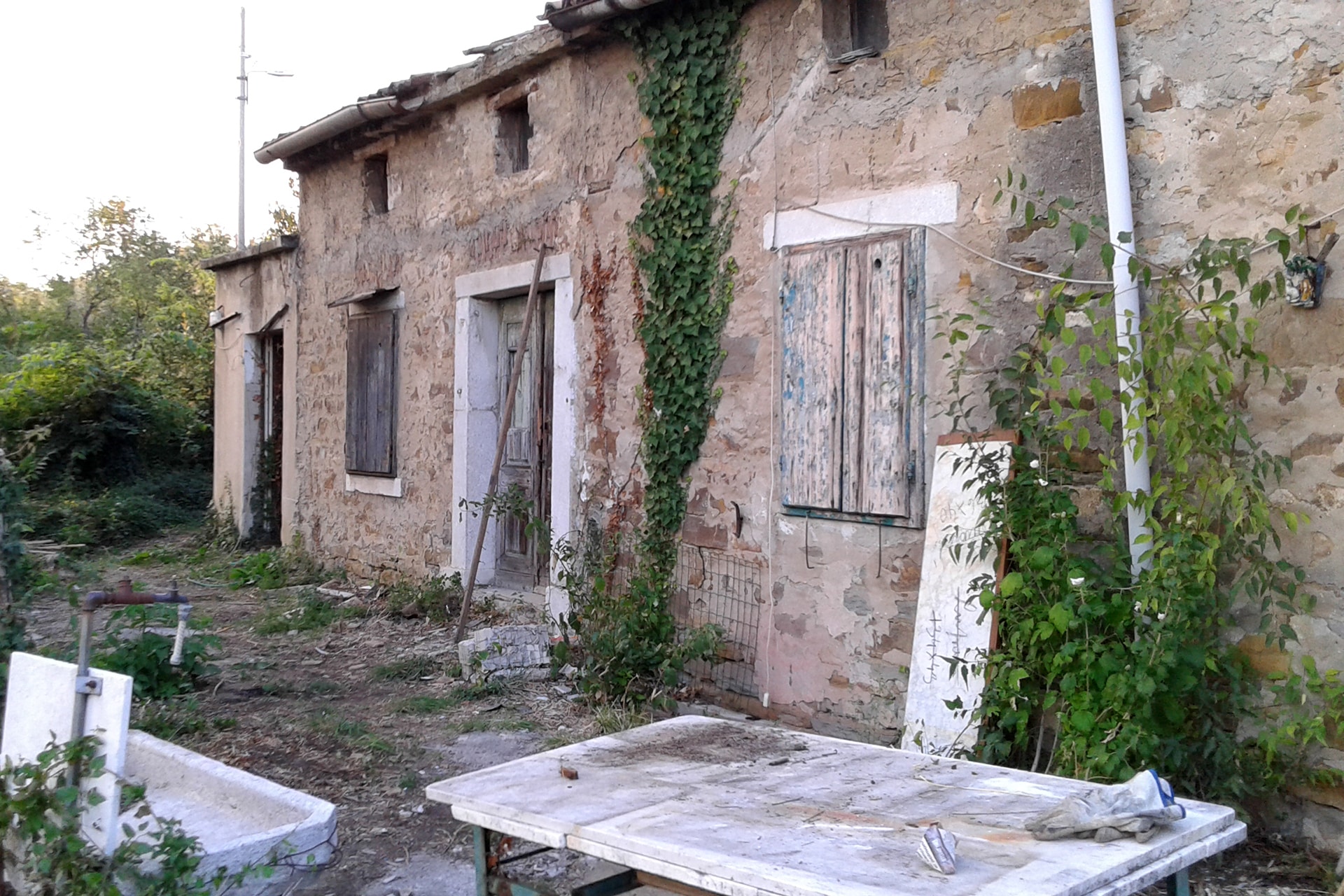
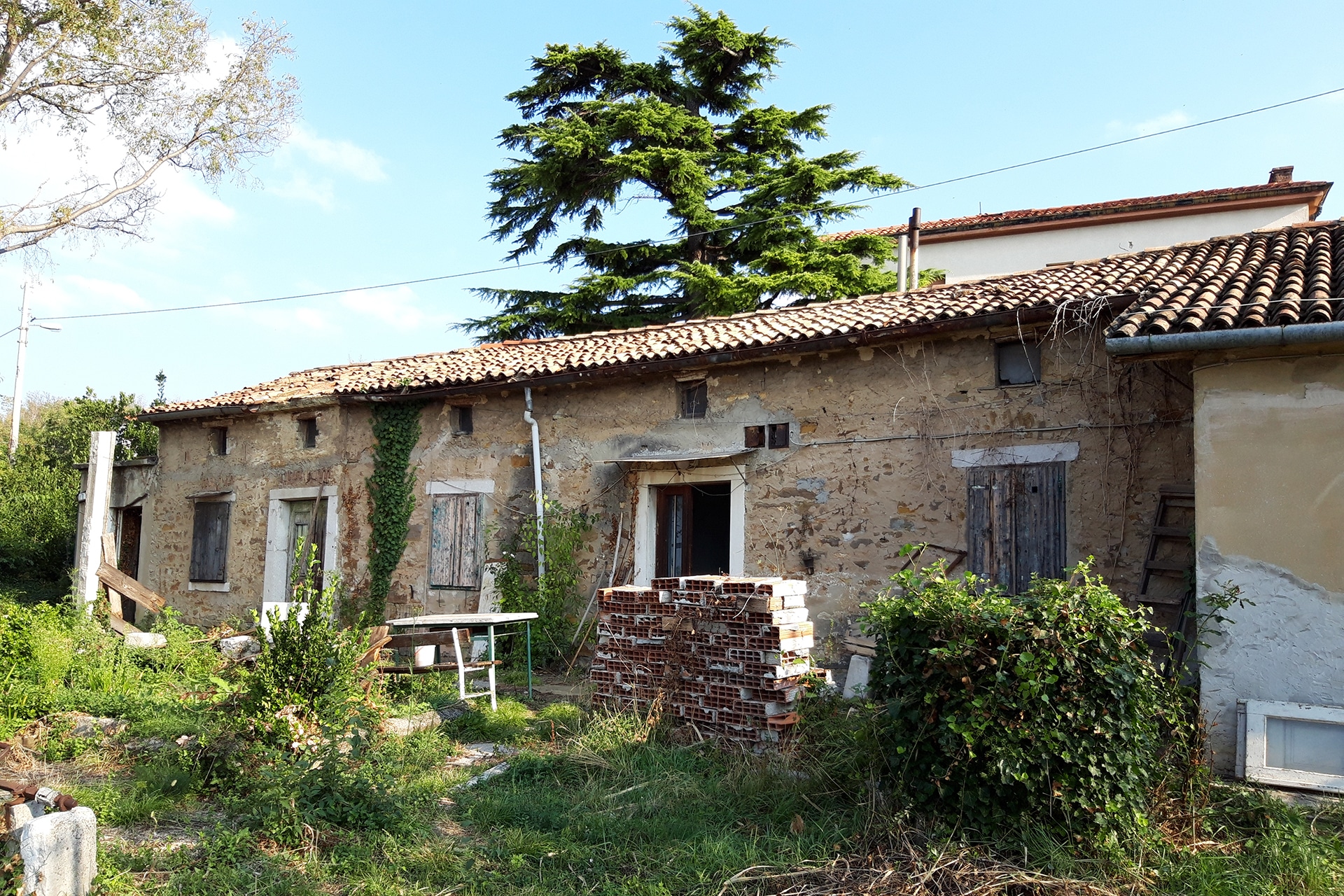
A Rustic Sandstone Building
Built at the end of the 19th century by master mason Valentin Daneu, known as Tinko. This is where he went to live with his wife Giovanna (“Vanza”) and their numerous daughters (the locals called them “tinkoke”, meaning Tinko’s daughters). Vanza, like her mother before her, was a laundress and passed the trade on to her daughters as well. All the sisters, although at different times, helped their mother in the laundry work, and some of them later continued on their own.
The house was therefore immediately equipped with a large room for lye-making, and Tinko himself, alongside his mason work, specialized in repairing tubs and various tools necessary for the laundresses’ work, so much so that other laundresses from the neighborhood often brought their tubs here for repair.
Some of the daughters stopped the activity when they left the house to get married, while others continued even after marriage in their new home and into old age, until the advent of the electric washing machine put an end to this ancient trade.
The laundresses were the sisters: Maria (“Ik ‘za’), Ivanka, Antonia (‘Tonza’), Giustina, Giuseppina (‘Pep’ ka”), Emilia (“Milka”), and Paolina.


